Commercial HVAC Systems: Powering Business Success
When managing a commercial property in the Greater Seattle area, your HVAC system represents one of the most critical investments in operational efficiency and occupant comfort. At All Climate Heating & Air Conditioning, we understand that commercial heating and cooling requirements differ dramatically from residential needs, demanding specialized expertise, robust equipment, and comprehensive maintenance strategies. Since 1993, we’ve partnered with businesses throughout Redmond, Kirkland, Bellevue, Lynnwood, Edmonds, and Mountlake Terrace to deliver HVAC solutions that balance performance, reliability, and energy efficiency.
Commercial HVAC systems must accommodate larger spaces, varying occupancy levels, and diverse usage patterns while maintaining consistent climate control across multiple zones. Whether you operate a retail storefront, manage an office complex, or oversee a warehouse facility, your heating and cooling infrastructure directly impacts employee productivity, customer satisfaction, and operational costs. We specialize in designing, installing, and maintaining commercial HVAC systems that address these unique challenges while optimizing energy consumption and minimizing downtime.
Understanding Commercial HVAC Components and Architecture
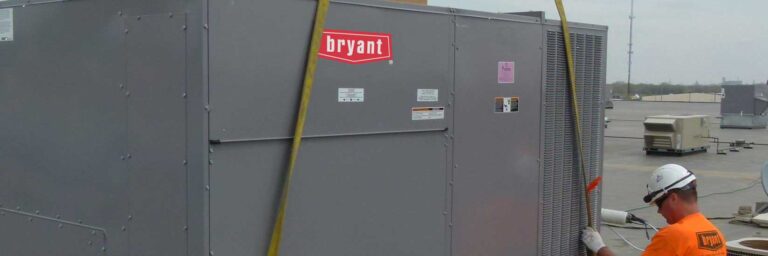
Commercial HVAC systems incorporate sophisticated components engineered to handle substantial heating and cooling loads efficiently. These systems typically feature rooftop units (RTUs) that consolidate heating, cooling, and ventilation functions into single packaged units, eliminating the need for extensive indoor mechanical rooms. RTUs range from five to fifty tons of cooling capacity, with modular designs allowing multiple units to serve different building zones independently. We install and service all major RTU brands, ensuring proper sizing calculations that account for building envelope characteristics, occupancy patterns, internal heat gains from equipment and lighting, and local climate conditions specific to the Pacific Northwest.
Variable air volume (VAV) systems represent another cornerstone of commercial HVAC design, automatically adjusting airflow to individual zones based on real-time temperature requirements. These systems incorporate dampers, sensors, and control modules that modulate air distribution, reducing energy waste associated with conditioning unoccupied spaces. Our technicians calibrate VAV boxes to maintain precise temperature control while minimizing pressure imbalances that can cause drafts, noise, or inadequate ventilation. Additionally, we integrate building automation systems (BAS) that provide centralized control over temperature setpoints, scheduling, and equipment operation, enabling facility managers to optimize comfort and efficiency through intuitive interfaces.
Energy Efficiency and Cost Management Strategies
Energy costs typically represent thirty to forty percent of a commercial building’s operating budget, making HVAC efficiency improvements essential for maintaining competitive overhead expenses. We implement comprehensive energy management strategies that begin with detailed load calculations and equipment selection optimized for your specific application. High-efficiency equipment featuring SEER ratings above 16 for cooling and AFUE ratings exceeding 95% for heating can reduce energy consumption by twenty-five to forty percent compared to standard efficiency units.
Our energy optimization services extend beyond equipment selection to encompass system design elements that maximize operational efficiency. We install economizer controls that utilize outdoor air for free cooling when ambient conditions permit, potentially reducing mechanical cooling requirements by fifty percent during shoulder seasons. Demand-controlled ventilation systems adjust fresh air intake based on actual occupancy levels measured through CO2 sensors, preventing energy waste from over-ventilation while maintaining indoor air quality standards. Heat recovery ventilators capture thermal energy from exhaust air streams, preconditioning incoming fresh air to reduce heating and cooling loads by fifteen to thirty percent.
Preventive Maintenance and Service Excellence
Commercial HVAC systems require consistent maintenance to sustain peak performance and prevent costly emergency repairs that disrupt business operations. Our comprehensive maintenance programs encompass monthly, quarterly, and annual service intervals tailored to equipment specifications and usage patterns. Regular maintenance activities include:
- Filter replacement and coil cleaning: maintaining optimal airflow and heat transfer efficiency
- Belt inspection and adjustment: preventing premature wear and unexpected failures
- Refrigerant level verification: ensuring proper cooling capacity and compressor protection
- Electrical component testing: identifying potential failures before they cause system shutdowns
- Lubrication of moving parts: reducing friction and extending equipment lifespan
- Calibration of controls and sensors: maintaining accurate temperature regulation and system response
Indoor Air Quality Solutions for Commercial Spaces
Indoor air quality significantly impacts occupant health, productivity, and comfort, particularly in commercial environments where numerous individuals share enclosed spaces for extended periods. We implement multi-stage filtration systems incorporating MERV-13 or higher rated filters that capture particles as small as 0.3 microns, including bacteria, viruses, and allergens. Ultraviolet germicidal irradiation (UVGI) systems installed within air handling units neutralize biological contaminants, reducing disease transmission risks and eliminating odor-causing microorganisms.
Humidity control represents another critical aspect of commercial indoor air quality management. Excessive humidity promotes mold growth and creates uncomfortable conditions, while insufficient humidity causes respiratory irritation and static electricity problems. We install commercial-grade humidification and dehumidification systems that maintain relative humidity between forty and sixty percent year-round, optimizing both comfort and health outcomes. Our ventilation assessments ensure compliance with ASHRAE 62.1 standards for minimum outdoor air requirements, balancing fresh air intake with energy efficiency considerations.
Technology Integration and Smart Building Solutions
Modern commercial HVAC systems leverage advanced technologies that enhance operational efficiency and provide unprecedented control over building climate conditions. We specialize in integrating Internet of Things (IoT) sensors that monitor temperature, humidity, air quality, and equipment performance parameters in real-time, transmitting data to cloud-based platforms for analysis and optimization. Machine learning algorithms identify patterns in system operation, predicting maintenance requirements and automatically adjusting setpoints to minimize energy consumption while maintaining comfort standards.
Remote monitoring capabilities enable facility managers to track system performance, receive alert notifications, and adjust operational parameters from any location through mobile applications or web interfaces. These systems generate comprehensive reports documenting energy usage trends, equipment runtime hours, and maintenance histories, supporting data-driven decision-making for capital planning and operational improvements. We configure automated fault detection and diagnostics (AFDD) protocols that identify performance degradation or component failures immediately, often before occupants notice comfort issues.
All Climate Heating & Air Conditioning continues advancing commercial HVAC excellence throughout the Greater Seattle area, combining decades of experience with cutting-edge technology to deliver solutions that enhance comfort, efficiency, and reliability. Our commitment to quality heating, cooling, and home comfort services ensures your commercial property maintains optimal environmental conditions while minimizing operational costs and environmental impact.